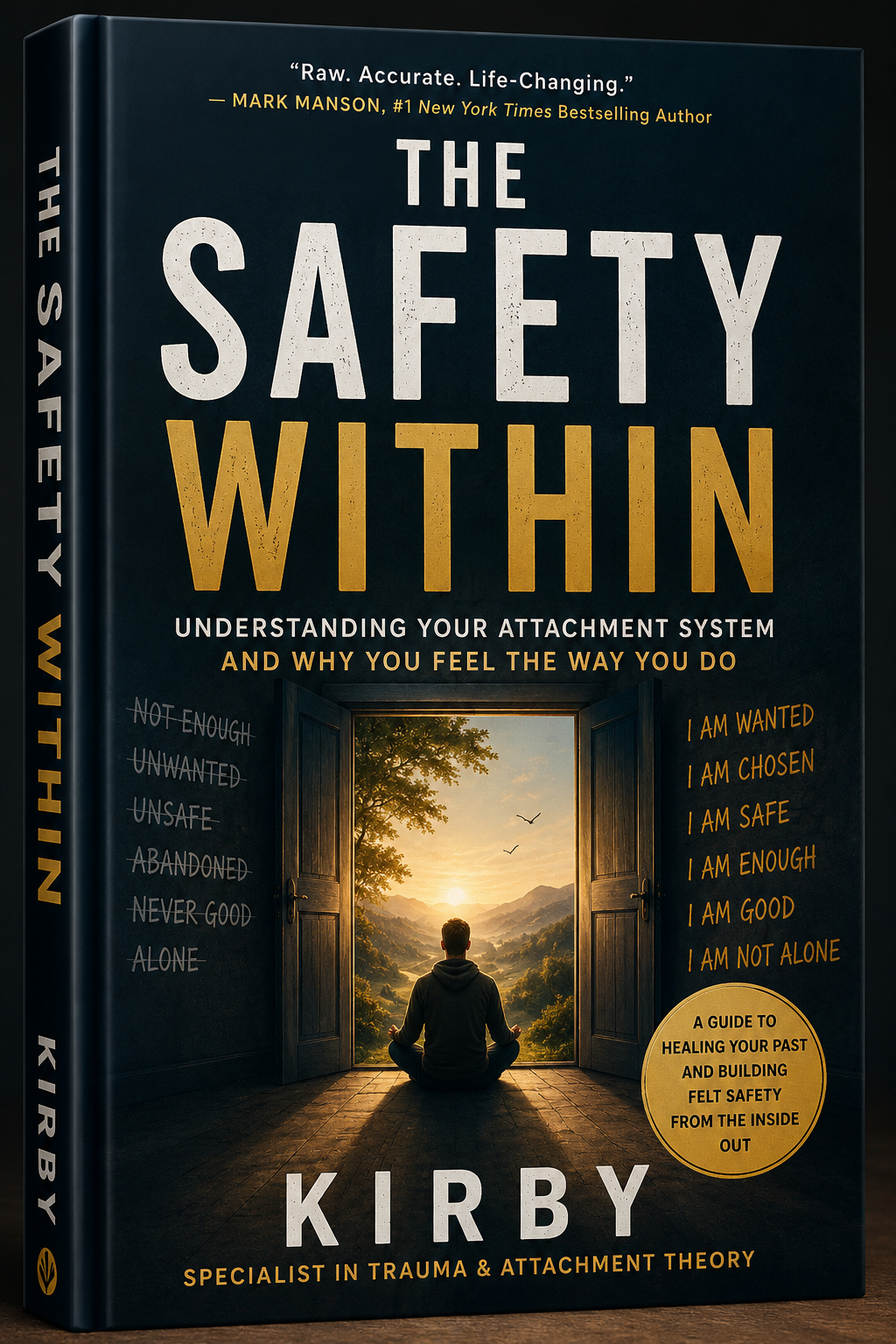
The Safety Within
Understanding Your Attachment System and Why You Feel the Way You Do
What if the reactions you struggle with aren't irrational at all?
Discover why your attachment system can overpower logic, why old patterns keep showing up in present relationships, and how to begin building felt safety from the inside out.
Why does the reaction feel so much bigger than the situation?
Meet your two minds.
Kirby's framework begins with a simple distinction: the part of you that understands what is happening and the part of you that is trying to keep you safe are not always operating by the same rules.
The conscious mind
Your rational, planning, language-using mind. It can analyze, make promises, understand consequences, and decide what would be best for you.
Thoughtful. Logical. Slow.The survival mind
Your fast, emotional, pattern-matching system. It responds to the felt sense of safety and danger, often before rational thought can catch up.
Protective. Powerful. Fast.The pattern underneath the pattern.
The goal is not simply to label yourself. It is to understand the machinery underneath your reactions so you can begin changing your relationship with them.
Why you get triggered
Why apparently small events can generate enormous emotional reactions.
Why attachment matters
How early experiences can shape what your system later interprets as connection, rejection, and safety.
Wanted. Chosen. Prioritized.
Why these experiences can carry such intense emotional weight in adult relationships.
The Four Enemies of Healing
Shame, blame, numbing, and self-delusion — patterns that can keep people trapped in the same loops.
Why logic isn't always enough
Knowing something intellectually is not the same as your nervous system believing it.
How safety becomes an inside job
Begin building a relationship with yourself that isn't completely dependent on outside reassurance.
Healing is not the absence of difficulty. It is the presence of capacity.
Kirby describes emotional capacity as a container. When that container is small, relatively modest stress can overflow into panic, shutdown, rage, or overwhelm.
The work is to widen the container — gradually increasing your ability to experience the full intensity of life without being hijacked by it.
A journey from understanding to change.
The Two Minds
Understand the rational mind, the survival mind, and why emotional reactions can overpower logic.
The Attachment System
Understand attachment, the Five Pillars, and the drive to feel wanted, chosen, and prioritized.
How Wounds Form
See how earlier experiences can become patterns that continue influencing relationships years later.
The Inside Job
Explore radical accountability, re-parenting, and the process of developing a more secure relationship with yourself.
The Safety Within Companion Workbook
10 guided exercises to help you understand your attachment system and begin building felt safety.

Kirby Fling
Kirby Fling has spent more than a decade studying attachment, trauma, emotional regulation, and the patterns that shape human relationships. His work combines extensive study, years of teaching and work with clients, and his own experience confronting the relationship patterns that once controlled his life.
His engineering background also shaped an unusual part of his approach: test what works, observe the result, and keep refining.
The Safety Within brings that work together into an accessible framework for understanding why we feel the way we do — and how safety can increasingly become an inside job.
Questions readers may have.
Is this a book about attachment styles?
Attachment theory is an important part of the book, but The Safety Within goes beyond simply identifying yourself as anxious, avoidant, or secure. It examines the survival mechanisms underneath those patterns and the process of developing greater internal safety.
Do I need to know anything about attachment theory first?
No. The book is designed as a foundational introduction to Kirby's framework.
Is this therapy?
No. The Safety Within is educational and personal-development material. It is not therapy, diagnosis, medical advice, or treatment.
Where can I buy it?
At launch, the book is expected to be available through Amazon. The purchase button will link directly to the live Amazon listing when available.
Will it eventually be available elsewhere?
Potentially. The website architecture is designed so additional retailer options can be added later without redesigning the page.
Your pain has a pattern.
Understanding the pattern is where change begins.
Understand your attachment system, the survival logic beneath your reactions, and the path toward building felt safety from within.